The Architecture of Identity: How Nations Build Themselves Through Story

Written by Kiaan Singh
Contributor & Researcher
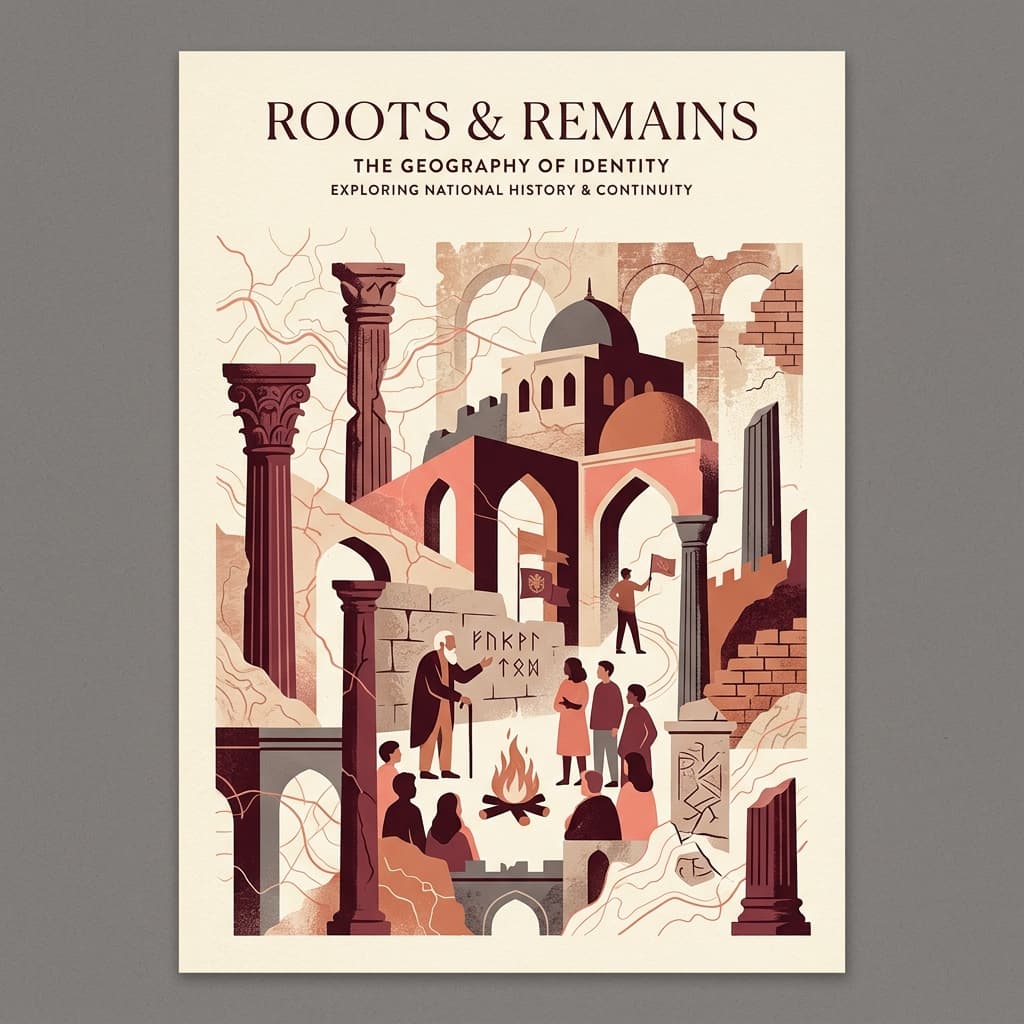
Every nation is, at its core, a shared fiction—a collective agreement to belong to something larger than the self. The stories we tell about who we are shape the borders we draw, the heroes we choose, and the enemies we name.
To understand the modern nation-state, we must look not to its standing armies or fiscal policies, but to its myths. We live in an era where cartography is treated as a science, yet borders remain deeply subjective lines drawn on maps, held in place by the consensus of collective storytelling. From ancient epics to modern high school history textbooks, the nation is constantly being imagined and re-imagined.
The Imagined Community
As the sociologist Benedict Anderson famously noted, nations are "imagined communities." They are imagined because the members of even the smallest nation will never know most of their fellow-members, meet them, or even hear of them, yet in the minds of each lives the image of their communion. This communion is built and sustained through shared narratives.
Consider the rituals of daily life that bind citizens together. Reading the same morning newspaper, celebrating the same national holidays, and standing for the same anthem. These are active, repetitive performances of identity.
"A nation is a soul, a spiritual principle. Two things, which in truth are but one, constitute this soul or spiritual principle. One lies in the past, one in the present." — Ernest Renan